%201.png)
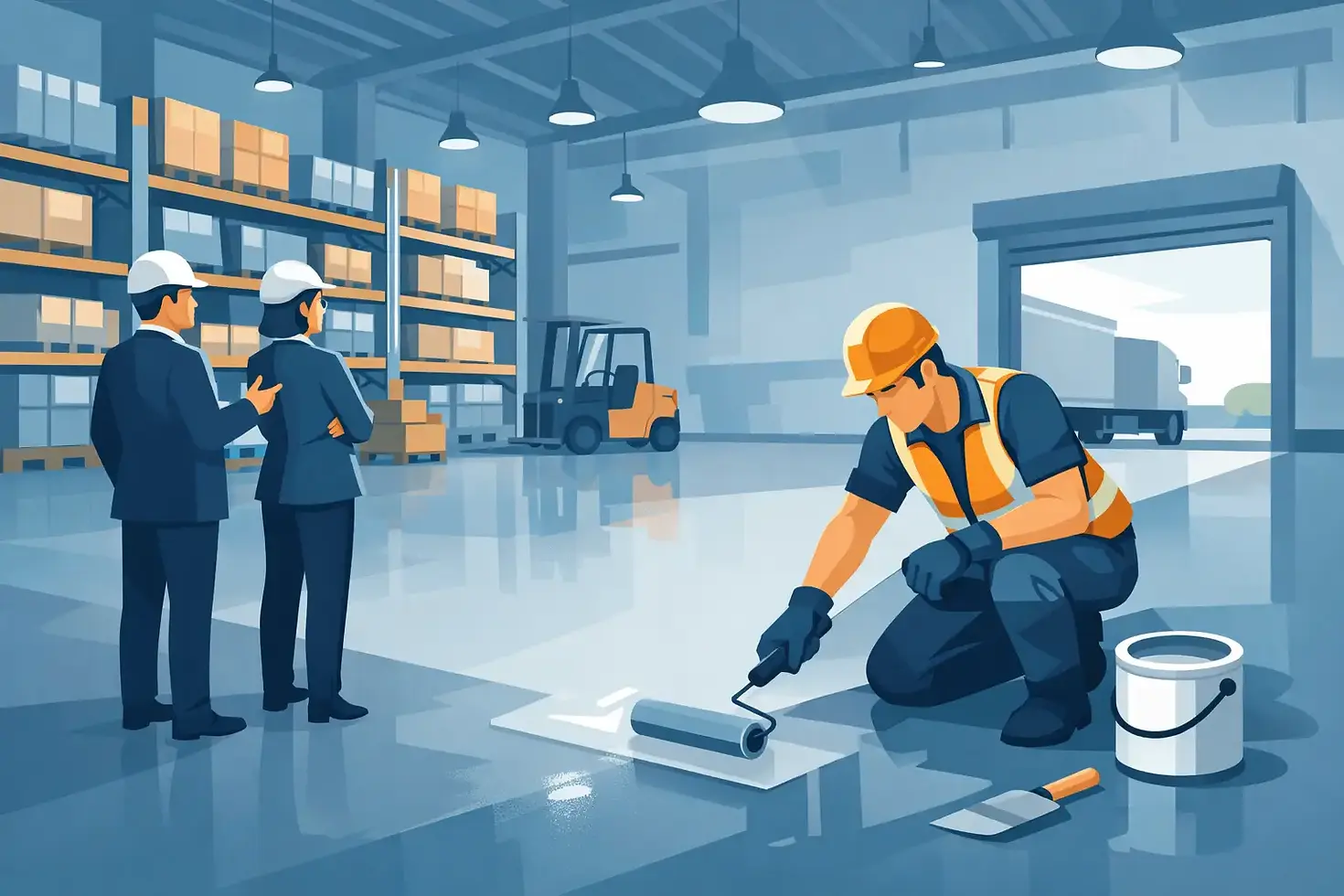
Choosing a Warehouse Floor Coating Contractor
- Rhen Weaver
- May 9
- 5 min read

A warehouse floor takes a beating long before anyone notices the wear. Forklift traffic, pallet drag, oil drips, tire marks, washdowns, and constant foot traffic all show up fast on bare concrete. That is why choosing the right warehouse floor coating contractor matters. A good-looking floor is nice, but in a working facility, performance comes first.
If the coating fails, the problem is not just cosmetic. Dusting concrete affects cleanliness, surface damage creates safety issues, and downtime costs money. For warehouse owners and facility managers in Northeast Florida, the stakes are even higher because heat, humidity, and moisture can expose weak prep work and low-grade materials in a hurry.
What a warehouse floor coating contractor should actually do
A lot of companies can roll product onto concrete. That does not make them the right fit for a warehouse. A true warehouse floor coating contractor should start with the condition of the slab, the type of traffic in the building, and the performance demands of the space.
Some warehouses need chemical resistance. Others need better abrasion resistance for forklifts and carts. Some facilities need a fast turnaround because shutting down operations for several days is not realistic. There is no one-size-fits-all answer, and any contractor who treats it that way is cutting corners before the job begins.
The real work starts with surface preparation. Concrete has to be cleaned, profiled, and repaired properly so the coating can bond. If there are cracks, spalls, moisture issues, or contamination from oils and tire residue, those problems need to be addressed before the first coat goes down. Done right the first time, the floor lasts longer and performs the way it should.
Why prep matters more than the coating name
Property owners often ask whether epoxy, polyurea, or polyaspartic is best. That is a fair question, but the better question is whether the floor is being prepared correctly for whichever system is chosen.
Even premium materials will fail on a poorly prepared surface. Peeling, bubbling, hot-tire pickup, and early wear usually trace back to prep issues, not just product choice. Mechanical grinding or shot blasting, proper crack and joint repair, and moisture testing are not extras. They are the foundation of the whole project.
In Florida, that point matters even more. High humidity and moisture vapor can create problems if the slab is not evaluated correctly. A warehouse floor coating contractor with local experience understands how climate affects installation timing, cure conditions, and long-term adhesion. That kind of experience is hard to fake, and it shows up in the finished floor.
Choosing the right coating system for a warehouse
Not every warehouse needs the same coating build. A light-duty storage space has different requirements than an active distribution facility with forklift traffic all day. The right contractor should walk you through the trade-offs clearly, without sales pressure and without pretending every product solves every problem.
Epoxy systems
Epoxy remains a strong option for many warehouse floors because it provides solid adhesion, chemical resistance, and a clean, professional finish. It can work well in areas where appearance, dust control, and moderate durability are priorities. The trade-off is cure time. Epoxy generally takes longer to return to service, which may not work for every operation.
Polyurea and polyaspartic coatings are often chosen when speed matters. They cure faster and can offer excellent durability, which helps reduce downtime. They can also perform well in Florida conditions when installed correctly. The trade-off is that these systems move fast during application, so contractor skill matters even more. Fast products do not leave much room for mistakes.
Build thickness and texture
For warehouses, the system design matters just as much as the chemistry. Some floors need a thicker build to handle impact and traffic. Others need added texture for slip resistance, especially in areas exposed to water or frequent cleaning. Too much texture, though, can make cleaning harder. Too little can create safety concerns. A good contractor helps balance those factors based on how the space is actually used.
Questions to ask before hiring a warehouse floor coating contractor
You do not need to be a coatings expert to make a smart hiring decision. You just need to ask the right questions and listen for straight answers.
Ask how the contractor prepares the concrete and what equipment they use. Ask whether they repair cracks and damaged areas before coating. Ask what product system they recommend for your type of traffic and why. Ask how long the floor will be out of service and what conditions could affect the schedule.
It is also worth asking who is doing the work. Some companies sell the job well but hand it off to crews with limited experience. In a warehouse setting, that is risky. The installation crew needs to understand material behavior, slab conditions, and timing. This is not a place for guesswork.
You should also expect clear pricing. If the proposal feels vague, it probably is. A dependable contractor should explain what is included, what repairs are expected, and what could change the cost if hidden slab issues are uncovered. Honest pricing is a lot more valuable than a low number that grows later.
Red flags that should make you pause
The biggest red flag is a contractor who talks mostly about the topcoat color and not much about prep. Warehouse floors fail from the ground up, not from a lack of shine.
Another warning sign is a one-price-fits-all quote given without a real evaluation of the slab. Warehouses vary too much for that. Age of concrete, existing coatings, moisture conditions, traffic load, and use patterns all affect the system recommendation.
Be cautious with promises that sound too easy. If someone claims every floor can be coated fast with no real surface prep, that is a problem. If they gloss over downtime, moisture, or maintenance, that is also a problem. A trustworthy contractor is direct about what the job needs and realistic about results.
What long-term performance really looks like
A properly coated warehouse floor should do more than look clean on day one. It should hold up under traffic, reduce concrete dust, improve cleanup, and support a safer, more professional work environment over time.
That does not mean it becomes maintenance-free. Every floor system has limits. Heavy impact, chemical spills left sitting, and constant abrasion will wear any surface eventually. The goal is not perfection forever. The goal is a floor system built for the way your facility operates, installed with the right prep, and maintained with basic common sense.
For many warehouse owners, the value shows up in fewer surface repairs, better housekeeping, and a space that reflects the standards of the business. Clean, durable floors send a message to employees, customers, and inspectors. They show that the facility is cared for and built to perform.
Why local experience matters in Northeast Florida
A contractor who understands warehouse floors in Northeast Florida brings more than product knowledge. They understand climate, scheduling challenges, and the reality of working around active businesses. That matters when humidity spikes, moisture conditions shift, or turnaround time is tight.
A local company with real coating experience can also give better recommendations based on what works in this region, not just what looks good in a brochure. That is part of why businesses choose specialists like Spartan Coatings for demanding concrete surfaces. The goal is not a gimmick or a rushed sale. It is workmanship, clear communication, and a floor built to last.
When you are comparing contractors, look past the sales pitch and focus on the process. The right warehouse floor coating contractor will be clear about prep, honest about trade-offs, and confident enough to recommend the system that fits your building instead of forcing one standard package. That is how you end up with a floor that works as hard as your facility does.


Comments